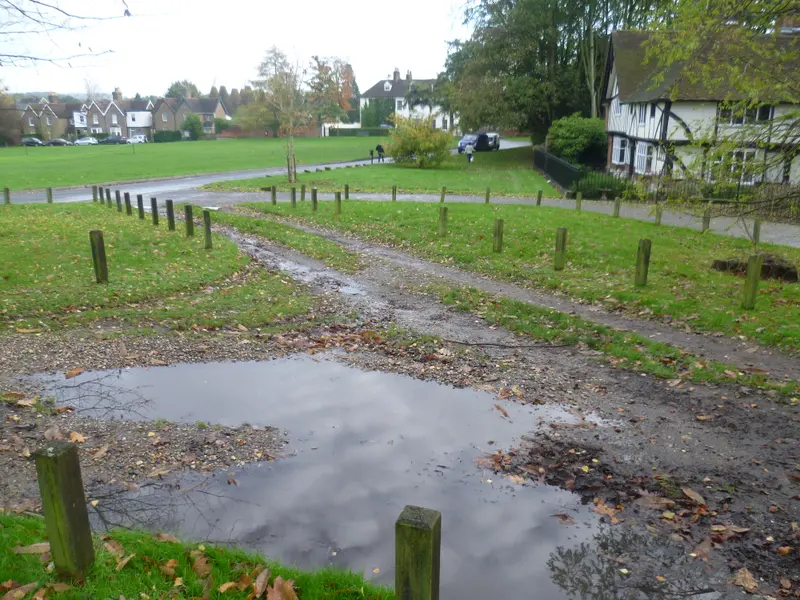
The most useful introduction to Bearsted's history starts with a small number of reliable facts, then leaves room for looking. Bearsted Parish Council's village history describes separate hamlets connected through Holy Cross, earlier agricultural and brick-and-tile industries, and a railway station opened in 1884. It also records cricket on the Green from 1749. These details offer a starting point, not a complete explanation of every building you see.
A local photograph can make that history feel tangible, but it cannot prove it on its own. A roofline, road or open space may raise interesting questions without answering them. This guide pairs the short documented outline with ways to observe the village and read old or new photographs more carefully.
Think about the village as connected places
The idea of several earlier hamlets is a useful reminder that a village need not have developed around one single centre at one single moment. Religious, working and social places can have different relationships with the surrounding land. When looking at a map, notice those relationships before trying to impose a neat story on them.
On a visit, you might compare the open space of the Green with the setting around Holy Cross, using current public routes and respecting access. Ask how each space feels and what activities it supports now. The answer is an observation about the present, which can sit alongside documented history without pretending to reconstruct the past.
For a photograph, this suggests making more than one kind of image. A broad view can show relationships between buildings and space. A closer view can record a material or detail. Neither has to carry the whole story, and a useful caption can explain the limited purpose of each.
Let the Green remain a present-day place
Historical associations can enrich a view, but the Green is not simply an exhibit. Its current uses and everyday rhythms are part of what makes it interesting. Looking only for an old-fashioned picture may cause you to miss the way the village actually works today.
Try comparing a photograph with plenty of open space to one that concentrates on the edges. In the first, the grass and sky may dominate. In the second, buildings, trees and routes become more important. Both can be accurate descriptions, yet they create different impressions. This is one reason photographs should be read as choices made by a photographer, not transparent summaries of a place.
If an event or ordinary activity is taking place, allow room for it and avoid interrupting people for a cleaner composition. A quiet view and a lively view may both have value. The question is what your photograph records, not whether you can make the present resemble an imagined past.
Read buildings through evidence rather than appearance
An irregular roof or weathered surface can suggest age, but neither establishes a construction date. Buildings change through repairs, extensions and alterations. A visually old detail may have been moved or replaced; a plain section may be historically significant. Treat the visible surface as the beginning of a question.
If a building interests you, record its name or location accurately and look for a reliable source afterwards. Historic England's list entries and local historical publications can help with specific questions. Check that you have identified the correct building before carrying information from one source into a caption or conversation.
For an exterior photograph taken from public space, a useful note might describe the materials and composition you can see. You do not need to supply a date unless it is known. Our guide to photographing village buildings explains how to keep the visual record clear while avoiding misleading perspective and captions.
Use the railway as a question about change
The station's opening gives a definite point to investigate in a wider story about movement and connections. It does not, by itself, explain exactly how every part of the village changed afterwards. A responsible account distinguishes the documented date from the further questions it inspires.
You might look at maps from different periods, where legitimately available, to compare routes and development. Keep the map dates and scales alongside any notes. A change visible between two maps tells you that something happened within that interval; it does not always reveal the precise year or reason.
For a present-day visitor arriving by rail, the station is also a practical starting point. See visiting Bearsted by train for current information sources and a flexible visit plan. The historical interest and the travel advice belong together, but timetable details should come from today's operator rather than a history article.
Compare photographs without forcing a before-and-after story
An older photograph can be fascinating even when its exact camera position is uncertain. Before trying to repeat it, identify stable features and consider what may have changed. Different focal lengths, cropping and image proportions can make two views look more different than the physical place actually is.
Do not stand somewhere unsuitable merely to match the original angle. A similar view from a permitted position can still support a thoughtful comparison. Explain the difference in viewpoint instead of hiding it. If an old image has an uncertain date or attribution, keep that uncertainty visible in your notes.
Image rights matter when sharing the comparison publicly. Finding an old photograph online does not make it free to reproduce. Use a source with clear permission, retain the required credit and avoid assuming that age alone settles the question. Our own credits page records the sources of the reference photographs used here.
Make a small personal history of looking
You do not need an extensive archive to begin recording how a familiar place changes. Choose one publicly accessible viewpoint, take a photograph and note the date, general conditions and your reason for choosing it. A later visit can add another record without turning the project into a claim about the whole village.
Keep the original files as well as any edited versions. A crop made for a print can remove details that may become interesting later. Clear filenames and a short text note are often more useful than a complicated cataloguing system that you will not maintain.
If the project includes other people's memories, distinguish their recollections from verified dates and ask before publishing personal material. A memory can be valuable precisely as a memory. It does not have to become an unquestioned historical fact to deserve attention.
Choose a picture that carries a real connection
Historical knowledge may change which photograph you want to keep, but a meaningful local print does not need to summarise centuries. It can show an ordinary route, a familiar arrangement of buildings or the space where a personal memory belongs. The connection may be modest and still last.
Browse the Bearsted photographs with that in mind. Read the location and image notes, then consider whether the composition works independently of the title. For church-specific context, our Holy Cross guide points to the official listing. Further historical reading is signposted by the parish council, whose short account provides the factual starting point for this article.
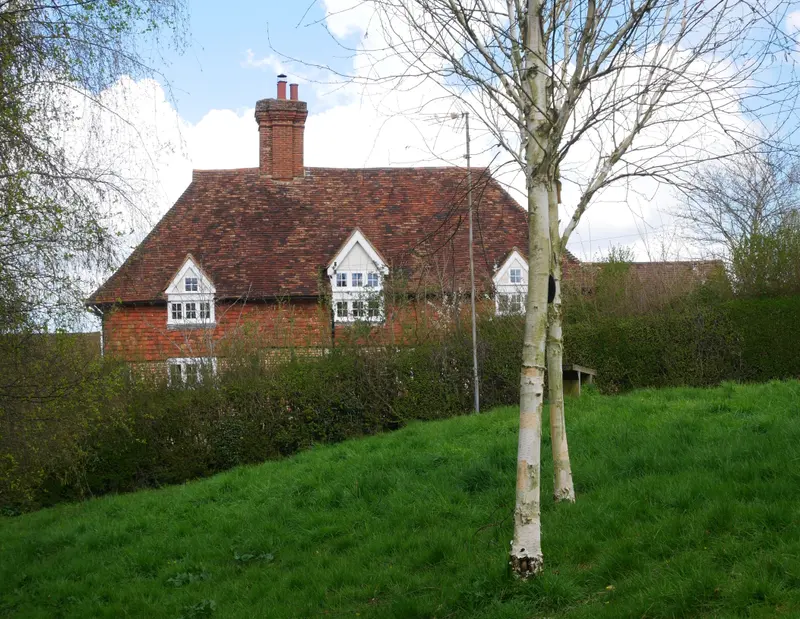
A place for your wall.
Explore the collection, then choose a size and finish at your own pace.