Holy Cross is an important subject in any introduction to Bearsted, but a useful guide should begin with what is verified. Historic England lists the Church of the Holy Cross on Church Lane as Grade I, under entry 1086253. That official record is the place to start for the building's designation and architectural description.
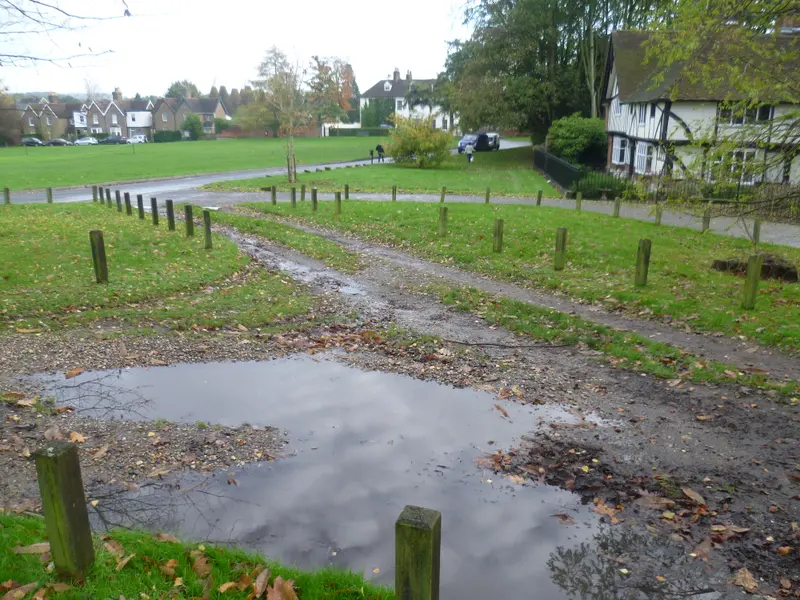
This article is a guide to looking at and researching the church as a photographic subject. It is not an account of an interior visit, and the accompanying photographs show other Bearsted views rather than the church. We do not currently have a church photograph in the gallery's reference collection. Keeping that distinction clear is part of describing a real place honestly.
Begin with the official record
A list entry gives a more reliable foundation than an unattributed caption. Read the name and location first to make sure you have the correct building, then distinguish the formal description from later comments or contributed photographs. Those different parts of a heritage page may serve different purposes and should not be treated as interchangeable evidence.
The entry can also give you questions to explore visually. You might want to understand the overall form, the relationship between parts of the building or the way particular materials appear. Do not assume that every feature mentioned will be visible from a public position. A research question remains useful even if the photograph cannot answer it on the day.
Keep a brief source note beside your photographs. Record the page title, web address and date you consulted it. That makes it easier to check a caption later and prevents a remembered detail gradually becoming more definite than the source actually supports.
Separate heritage status from visitor access
A building's listing does not establish opening hours or permission to enter. Churches can have services, private events, maintenance or other reasons for limiting access. Check current information with the church before planning any interior visit, and follow signs and requests when you arrive.
For photography, begin with what can be seen respectfully from permitted areas. Keep routes and entrances clear, avoid interrupting worship or private gatherings, and ask if you are unsure about taking pictures in a particular space. A quiet approach is more useful than trying to secure every possible angle.
If your visit depends on specific access needs, ask about those details directly. An attractive exterior photograph does not tell you about steps, door widths or facilities. This guide makes no claim about the current accessibility of the building or its surroundings.
Make one photograph that explains the setting
An architectural subject is easier to understand when a picture gives it some context. Before concentrating on the building, look at how it sits within the available view. Consider the ground, surrounding vegetation and the amount of sky. The setting can explain scale and position without requiring a crowded frame.
Try a composition in which the main structure has room around its outline. If a branch merges awkwardly with an edge, a small change of viewpoint may separate them. Stay within permitted areas and accept that some obstructions belong to the view you can legitimately make.
Avoid treating the widest possible shot as automatically the most informative. A very wide lens can make nearby objects seem disproportionately large and the building look remote. Sometimes a slightly tighter view gives a clearer account of the relationship you want to show.
Use vertical lines as a deliberate choice
When you tilt a camera upwards, vertical lines can appear to converge. That effect may give a strong sense of looking up, but it can also distract from a straightforward record. Decide whether you want an expressive composition or a more measured description before correcting the image.
For a calmer starting point, hold the camera more level and include enough space to adjust the crop later. Moving farther back may help where there is a suitable public position. Do not step into a road or onto private ground to solve a perspective problem; choose a different composition instead.
If you use perspective correction afterwards, compare the result with the original. Heavy correction can stretch the building or crop away important parts. The aim is not to make every line mathematically perfect at any cost, but to produce an image that still reads as a credible view.
Find a detail without inventing its story
A texture, joint or architectural edge can make an interesting close photograph. Sideways light may reveal relief, while softer light can make differences in colour easier to see. Choose the lighting that helps explain the visible feature rather than waiting for a dramatic effect that obscures it.
Keep the caption within the evidence. If you can describe a material confidently, do so; if you cannot, describe the shape or relationship instead. A photograph of a weathered surface does not establish its age, and a repair does not reveal its cause without supporting information.
The same care applies to memorials and personal inscriptions. Consider whether recording or sharing them is appropriate, particularly when people are visiting for private reasons. You can make a thoughtful study of a building without treating every personal detail around it as material for publication.
Build a short sequence rather than a catalogue
Three different photographs are enough for a coherent study: one of the setting, one of the main form and one of a detail. Each should answer a different visual question. If two frames do the same job, select the clearer one rather than keeping both simply because they took effort to make.
At home, arrange the images in that order and write a sentence for each. Notice whether the detail makes sense after the wider view. If it remains confusing, a slightly broader crop may be more useful than a longer explanation. Good sequencing lets one photograph provide context for another.
Record what you did not photograph as well. A note that the study covers only the exterior prevents it later being described as a complete survey. Modest, accurate scope makes a small photographic project more trustworthy, not less interesting.
Connect the church with the wider village
Bearsted Parish Council's introduction places Holy Cross within the village's development. For a broader reading, pair your church research with our Bearsted history guide. Keep a distinction between sourced historical context and your personal response to the present-day view.
You might prefer a photograph of the wider village for a wall, or a close architectural study that rewards nearby viewing. Neither is a more authentic choice. Think about the connection you want the picture to hold and the distance from which you will usually see it.
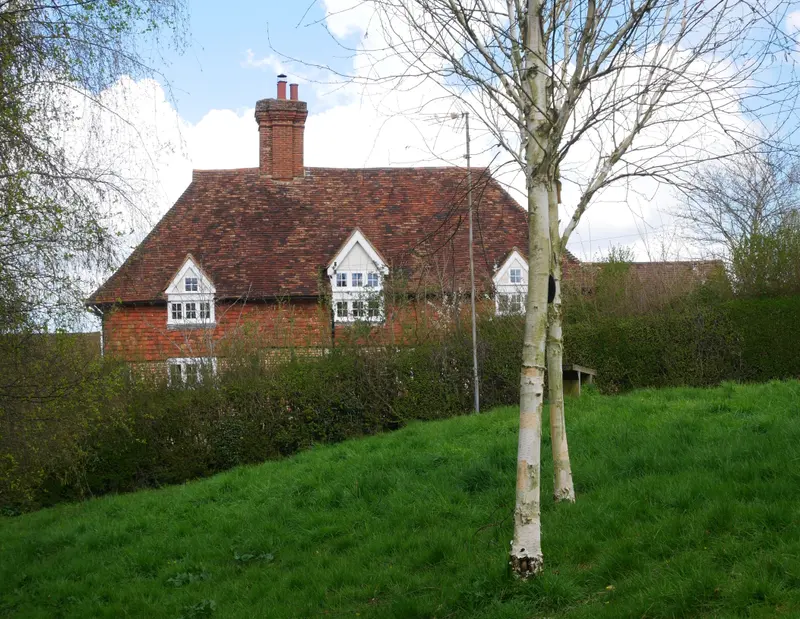
The Bearsted collection currently offers credited reference views of the area, with no claim that a Holy Cross print is already available. For the technical side of making your own study, read photographing village buildings. The useful next step is a well-prepared visit and an accurate record, rather than a promise of a particular photograph.
A place for your wall.
Explore the collection, then choose a size and finish at your own pace.