A visit to Bearsted Woodland Trust does not need to become a long walk to be worthwhile. A short outing with time to pause can reveal different colours, textures and relationships within a familiar patch of landscape. Start by deciding how much walking suits you, check the Trust's current information and give yourself permission to turn back before the visit becomes tiring.
The Trust's Autumn 2024 newsletter describes a volunteer-managed community landscape. That is useful context for approaching the place with care, but an older newsletter cannot confirm today's access arrangements or path conditions. This article is a planning and observation guide. It does not claim a recent site inspection or provide turn-by-turn directions.
Decide what a good visit would look like
Before looking at a map, ask what you want from the outing. Is it a brief change of scene, a chance to take photographs, or time outdoors with someone who needs a gentle pace? Different answers produce different plans. A photographer may be happy to spend twenty minutes around one subject; another visitor may prefer steady movement with only a few pauses.
Choose a time allowance that includes the return journey. Do not use every available minute for the outward part and assume coming back will be effortless. If you are visiting with other people, make the shortest comfortable option the shared starting point. Extra walking can remain optional rather than becoming an expectation.
For a first visit, one simple aim is enough: notice an open view, a group of trees and a smaller detail. You may find all three close together. The aim encourages attention without depending on a particular species, seasonal display or water level being present when you arrive.
Use current access information
Consult Bearsted Woodland Trust's website for current visitor guidance, entrances and notices. If a path surface, gate or parking detail determines whether you can visit, seek a direct answer rather than inferring it from a photograph. Older images can show what a place looked like without establishing what access is available now.
Check recent weather as well as the forecast. A dry afternoon can follow several wet days, and the ground may tell a different story from the sky. Choose footwear and a route appropriate to the conditions you actually encounter. If something feels unsuitable, a shorter outing or another day is a sensible outcome.
Save the relevant information before leaving home. Keep an agreed meeting point if your group might separate and make sure everybody understands the return plan. These small preparations leave more room to enjoy the place because fewer practical questions need answering in the middle of the visit.
Notice the change between open and enclosed space
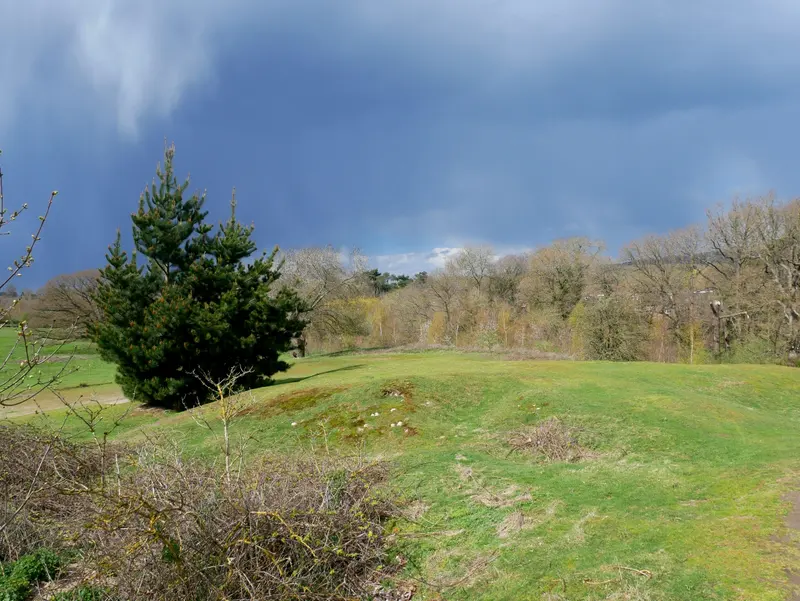
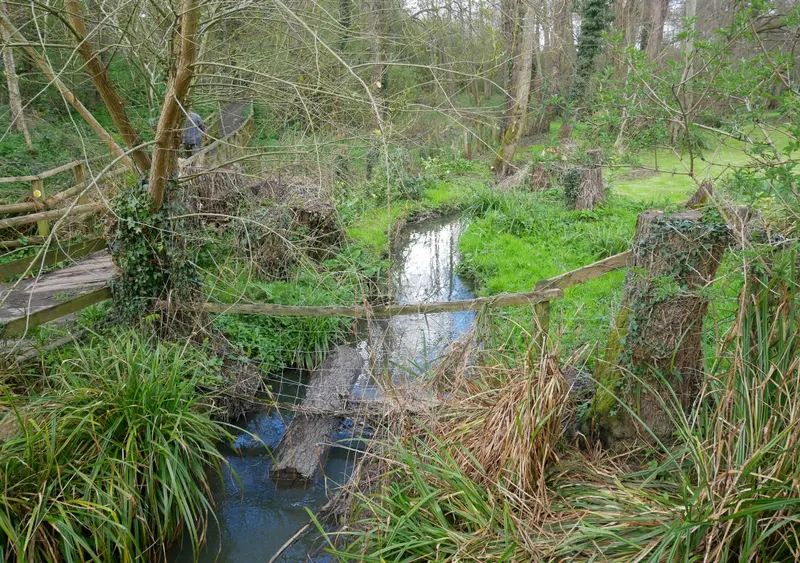
Our meadow reference photograph shows grass, trees and an open area; the stream photograph gives a more enclosed impression. They illustrate two different visual experiences rather than a prescribed route between exact camera positions. You can use that contrast as an observation exercise wherever your chosen path allows it.
In a more open scene, look at the outline of trees and the amount of sky. In a more enclosed scene, notice overlapping branches, shadows and the smaller spaces between objects. Neither view is inherently more photogenic. They simply ask the eye to move differently, which can make a short collection of photographs more varied.
Try describing a scene in one sentence before taking the picture. For example, you might notice a light area beyond darker trunks or a path that bends out of view. Once you know the relationship that interests you, deciding what to include in the frame becomes much easier.
Photograph water without making it an expedition
If water is visible from your route, begin by watching rather than moving closer. Reflections and brightness may change with your angle, and the most interesting part of the scene might already be visible from a comfortable position. There is no need to reach the edge of a bank for a worthwhile photograph.
Use a simple composition with one clear point of attention. A patch of reflected sky can be much brighter than leaves around it, so check the photograph after taking it. If the bright area overwhelms the scene, change the composition or try a slightly different exposure. Avoid assuming that a complicated camera technique is needed to make a small water scene interesting.
Keep the photograph honest when captioning it later. Do not identify wildlife, a named watercourse or a particular feature unless you have confirmed it. “Water beneath trees at Bearsted Woodland Trust” can be a more useful description than a confident but mistaken identification.
Make the outing work for a mixed group
Agree on how photography stops will fit into the visit. One person repeatedly stopping without explanation can make a short walk feel much longer to everybody else. A few shared pauses work better: take a photograph, invite someone to point out what they noticed, then move on together.
Children may enjoy choosing a colour or a shape to look for from the path. Keep the task open enough that it can succeed in different seasons. Finding a curve, a bright patch and a repeated pattern is more reliable than promising a specific flower or animal. Leave natural objects in place and use photographs or drawings as the record.
If somebody needs frequent rests or a particularly firm surface, check suitable options in advance. This page does not label the whole site accessible. People's requirements differ, and a useful plan is built from specific information rather than a reassuring general adjective.
Respect the work behind the landscape
The Trust's Autumn 2024 newsletter gives a dated account of volunteer work and habitat management. Knowing that people care for the place can change how you look at it. A maintained edge, a protected area or a temporary restriction is part of a working landscape, not an inconvenience to edit out of the experience.
Follow current signs, keep paths clear and take everything you brought away with you. If you have a dog, check and follow the site's current guidance. Avoid moving branches, picking plants or leaving the path to construct a cleaner photograph. The scene remains more valuable as a living place than as a perfectly controlled backdrop.
If the visit leaves you wanting to contribute, use the Trust's own channels to find current opportunities. This gallery is independent of the Trust and does not speak on its behalf. Links here direct you to the organisation responsible for its own information and activities.
Keep a small visual diary
Afterwards, select a few photographs and note what you noticed about light, colour and space. On a later visit, compare those observations without expecting the landscape to repeat itself. A different canopy, water level or sky may make the same kind of subject feel quite different.
For more on choosing intimate landscapes as pictures, read woodland and water. The woodland collection shows the credited reference images used in the gallery. They can help you think about composition and display, while your own visit provides the personal connection that no guide can prescribe.
A place for your wall.
Explore the collection, then choose a size and finish at your own pace.