For a first visit to Bearsted, start with the village rather than trying to fit every nearby attraction into one afternoon. The Green gives you a place to orient yourself; the buildings, paths and trees offer smaller things to notice; and a separate visit to Bearsted Woodland Trust can add a different kind of landscape. Choose one main interest and leave some unplanned time around it.
This guide is for someone who enjoys looking, walking a little and perhaps taking photographs. It is a flexible way to organise a visit, not a timed walking route or a list of businesses whose opening hours we have verified. You can use the same approach whether you are discovering the village or showing a familiar place to a friend.
Start at the Green and find your bearings
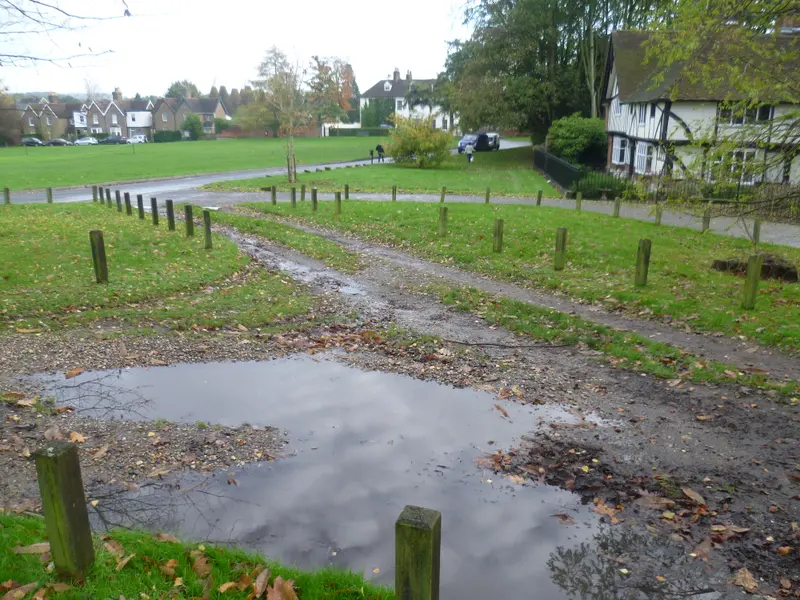
Give yourself a few minutes before taking out the camera. Look at the relationship between the open grass and the buildings around it. Notice where people are moving, which paths are in use and how the light falls across the view. That first pause makes it easier to decide what you actually want to explore, rather than collecting pictures of everything in sight.
The Green is part of a living village. A match, maintenance work or an ordinary busy day may change the space available to visitors. Leave room for people who are using it and follow signs on the day. You do not need an empty scene for a photograph to feel recognisably local, and waiting for a quieter moment is often more useful than seeking a different vantage point.
Try one broad photograph that includes the setting, then a closer composition with fewer elements. Those two images serve different purposes: one records where you went, while the other shows what caught your attention. Our Bearsted Green photo essay explores that distinction in more detail.
Look for details between the obvious subjects
After the wide view, choose a small visual theme. It might be the meeting of roofs and sky, the colours of doors seen from public space, or the way a path leads towards a building. A theme gives a short wander some structure without turning it into a checklist. Three well-chosen pictures can recall a place more clearly than thirty unrelated ones.
Stay within public areas and be considerate around houses. A picturesque building may also be someone's home; an appealing gate does not invite you through it. If a detail is difficult to see without standing in the road or entering a driveway, choose another subject. The limitations of an ordinary viewpoint can lead to a more thoughtful composition.
Make a note of any building you would like to learn about later. Separate what you can see from what you think its history might be. Old-looking materials do not establish an age, and a decorative feature is not enough evidence for a story about former residents. The pleasure of noticing a detail does not depend on immediately explaining it.
Add woodland if it suits the day
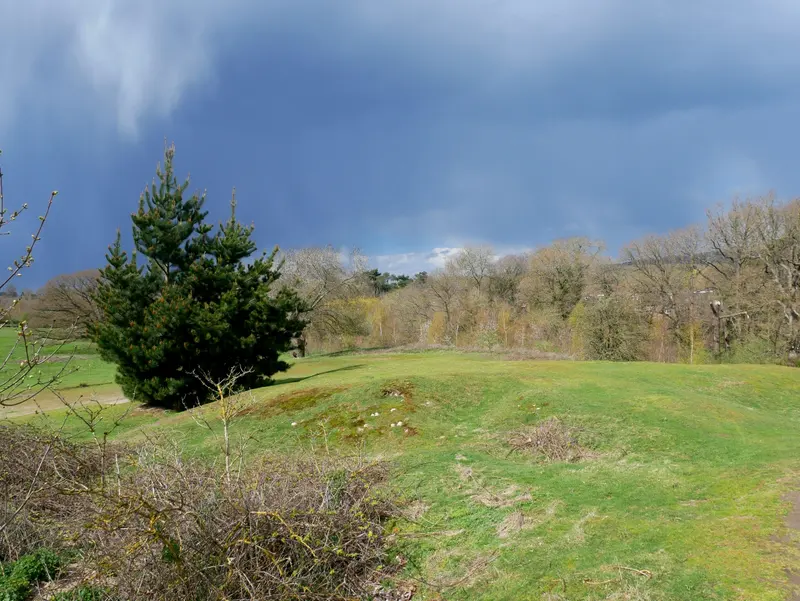
Bearsted Woodland Trust offers another way to look at the area, with a landscape represented in our reference photographs by grass, trees and water. Treat it as its own part of the visit, with time to check the current entrances, paths and conditions. Our Woodland Trust visit guide helps you prepare without assuming that every path suits every visitor.
Change the scale of your photography when you move from village space to a greener setting. A whole tree, a group of trunks and a small reflection each tell a different story. You might keep the same theme of light and shade while using quite different subjects. This gives a small set of photographs coherence without making them look identical.
If the ground is wet, daylight is short or your group is ready for a rest, save the woodland for another day. A visit does not become less worthwhile because it stays small. It is better to enjoy one place properly than finish with a hurried extra stop that nobody has the energy to appreciate.
Treat Thurnham as a separate choice
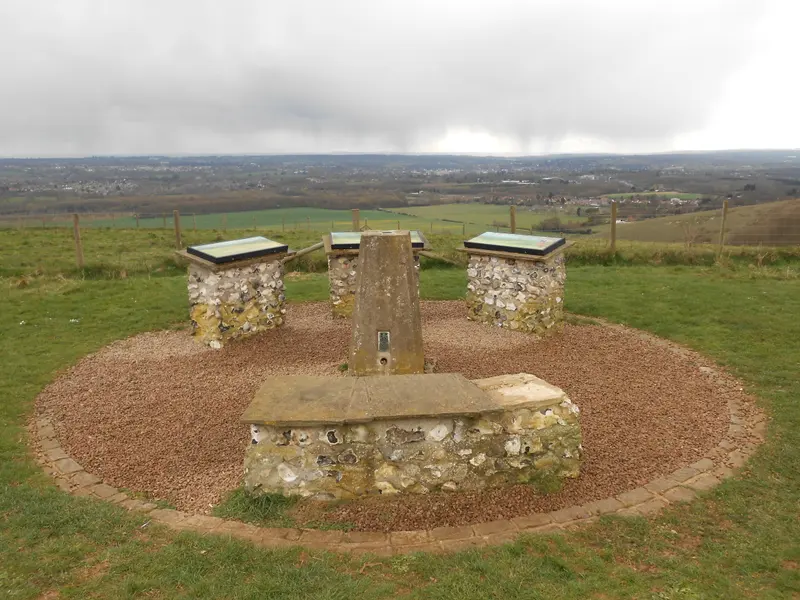
The countryside around Thurnham may be tempting when you are nearby, but a visit to the village and an outing on the Downs require different planning. An elevated landscape brings questions about weather, walking surfaces, transport and the return journey. Do not assume that two places appearing close together on a map make a short or straightforward walk between them.
If a broad countryside view is the main reason for your trip, consider making White Horse Wood the focus instead. You can then approach Bearsted as a separate visit rather than an obligation to fit into the same day. If you want to walk between the areas, use our Bearsted to Thurnham planning notes alongside a current official map.
For a mixed group, agree on the kind of outing before setting off. One person may want a sustained walk while another hopes for a short wander and a place to sit. A clear choice at the beginning prevents a gentle village visit gradually becoming a much longer expedition by accident.
Plan around the people coming with you
Write down the practical needs that will shape the day: distance, rest opportunities, food, toilets and transport. Check those details with the relevant venue or operator before relying on them. A photograph of a bench or a business sign in an older guide is not evidence that a particular facility is available now.
With children, choose a simple looking game rather than a long list of stops. Find three different leaf shapes from the path, notice three kinds of roofline, or make one wide and one close photograph of the same scene. With a friend interested in history, leave time for reading and discussion. With a photographer, allow pauses without expecting everyone else to wait indefinitely.
Keep any meal or refreshment stop flexible unless you have checked opening hours and booked where necessary. This article does not rank pubs or restaurants. The useful decision is which place suits your group on the actual date, including dietary needs and any accessibility requirements that deserve a direct answer.
Leave with a small record of the visit
Before heading home, choose your favourite three photographs and write one sentence about each. Include the place and what you noticed, rather than trying to create a polished travel caption. A little context recorded while the day is fresh can make the photographs more meaningful when you return to them months later.
If you are visiting without a car, confirm the return journey early enough to change your plans comfortably. Our Bearsted by train guide links to the official station resources. If you drove, keep the location and conditions of your parking clear; do not rely on old articles for parking restrictions or charges.
You can also browse the Bearsted collection to compare how familiar views work as pictures for a wall. The current collection identifies its reference imagery openly. A photograph you keep need not show every place you visited: one well-chosen scene may hold the feeling of the whole afternoon.
Local context and further information
Bearsted Parish Council's introduction provides background to the village. For current local notices, use the council's website before travelling. This article offers visit-planning ideas rather than a firsthand trip report. The photographs show credited local views; they are not a record of a recent visit or current access conditions. Full creator details are on our credits page.
A place for your wall.
Explore the collection, then choose a size and finish at your own pace.