A photograph of a ruin can tell several different stories. It can establish where the remains sit in the landscape, draw attention to a surface, or show how the shape of a wall changes the space around it. The strongest story is not necessarily the one with the widest view. Sometimes the small details explain why the place is worth looking at in the first place.
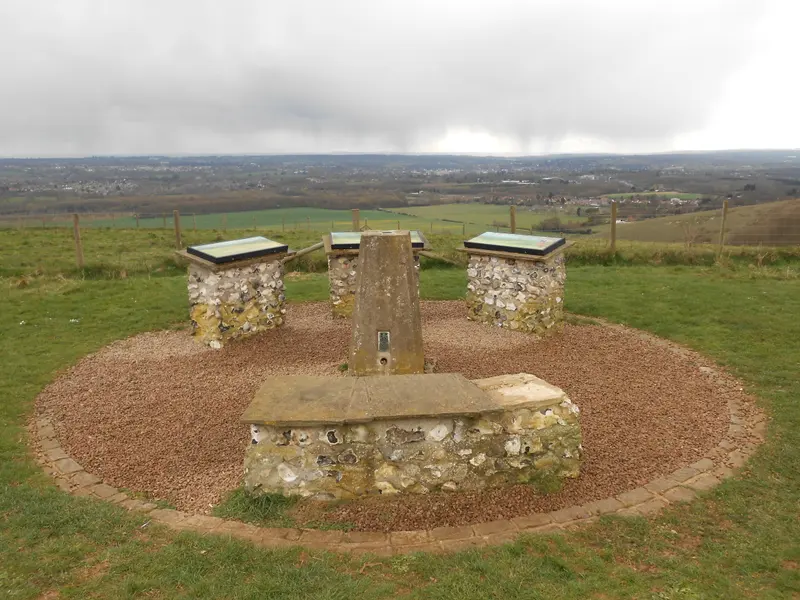
Thurnham Castle is a subject planned for a future original photography commission. We do not yet have an approved castle image series in this preview. The accompanying photograph shows the viewpoint at White Horse Wood, not the castle itself. This distinction matters: a picture of the surrounding landscape should not be captioned as evidence of a building outside its frame.
Establish the setting before the detail
Before looking closely at a historic structure, it helps to understand its relationship with the land. Does it sit above a wider view, beside a route, or within an enclosed space? A setting photograph can answer those questions without needing a long caption. It gives later close views a context that they cannot provide on their own.
For a future Thurnham series, a useful opening image would show the relationship between the remains and the surrounding ground from a permitted position. The aim would be clarity, rather than making the site appear larger or more isolated than it is. A dramatic camera angle can be effective, but it should not replace an honest sense of place.
This is also a useful principle when selecting a single print. Think about whether you want an image that tells you where you are or one that draws you into a particular detail. Either can make meaningful wall art. They simply create different kinds of connection with the place.
Let texture carry some of the story
Stone, mortar and the edges of a surviving wall can offer a rich photographic subject. Their interest comes partly from variation: different tones, irregular surfaces and transitions between built material and its surroundings. A careful photograph can show those relationships without turning them into a claim about a specific historical event.
Light makes a considerable difference to the way texture reads. A surface lit from the side may show strong relief, while softer illumination can bring attention to colour and shape. The choice should suit the detail being recorded. It is useful to compare more than one condition when planning a photographic series, rather than assuming that a single type of light is always best.
Avoid reading certainty into every mark. A visible break or change in material may raise a question, but interpreting it requires reliable historical or architectural evidence. A photographic caption can describe what is present without pretending to explain everything that happened to it. That restraint leaves room for both the image and the actual history.
Keep the historical account proportionate
Kent Downs describes the ruins as dating to the twelfth century and places access through White Horse Wood Country Park, with the North Downs Way below the site. Those broad details establish useful context. For a detailed historical account, consult the underlying heritage records rather than inferring a chronology from the appearance of the ruins.
For an image-led article, history should help the reader understand the subject rather than overwhelm the photographs. A short, well-supported explanation beside a relevant image can be more useful than a long sequence of dates disconnected from what is visible. If a detail cannot be illustrated or verified, it may belong in a separate historical study.
The eventual commission should keep a source log alongside the image log. That makes it possible to distinguish a photographer’s observation from a researched statement. It also helps when captions are reused on artwork pages, where a shortened version of an article can otherwise lose the qualification that made the original accurate.
Show scale without staging a scene
An isolated texture photograph can make scale difficult to judge. A small surface might look like a large wall, or a substantial ruin might appear as a fragment. Including a familiar feature can help, but the choice should be thoughtful. The purpose is to make the image legible, not to manufacture activity for the camera.
A wider composition can sometimes solve the problem without including people. The ground, vegetation and the relationship between several surviving features may provide enough context. Where visitors naturally appear in a photograph, their presence should be considered in the image’s use and publication review rather than treated as an incidental detail to ignore.
For a local print collection, scale can also be part of the mood. A close view may feel contemplative and almost abstract. A broad view may feel more descriptive. Offering both kinds of image would give people different ways to connect with the same place, provided each photograph is accurately titled and accompanied by appropriate information.
A commission built around three kinds of picture
A useful starting brief would include a setting, a structure and a detail. The setting establishes the landscape. The structure shows the remains in a readable composition. The detail explores a surface or relationship that rewards closer attention. Together, they can create a coherent article without relying on several nearly identical wide views.
Each image should have a clear purpose before more are added. If two photographs make the same point, choose the stronger one or explain the comparison. Different lighting, seasons or viewpoints can be meaningful when the difference is the subject of the article. They are less useful when they merely increase the number of pictures on the page.
The production notes should include the capture location, photographer, date where recorded, permissions and approved crops. Current access and site guidance need checking before the shoot. The planned series is an editorial commission, not permission to leave a path, climb remains or alter the setting to improve a composition.
From historic subject to a picture at home
A castle photograph does not need an ornate frame to acknowledge its subject. A simple finish may allow the texture and geometry of the image to remain the focus. The choice depends on the photograph’s tonal range and the room around it, rather than a rule that old buildings require traditional decoration.
Consider the viewing distance. Fine detail may be best placed somewhere you can stand close to it. A broader setting can hold its shape from farther away. Check the actual crop and outer frame size before imagining how a picture will sit above furniture. A small screen can make a detailed photograph seem more concentrated than it will feel on a wall.
Until an original castle series is commissioned, the Thurnham collection offers only the clearly labelled material available in this preview. A future addition should earn its place through accurate photography, careful captions and a distinct way of looking. The aim is a story grounded in the site, with enough visual interest to remain satisfying beyond its title.
Sources and image notes
Historical and location context: Kent Downs, Thurnham Castle. Check current official visitor information before planning a visit. The hero is a White Horse Wood viewpoint photograph by Danny P Robinson; it is not a castle photograph. See the full attribution. This is a photography-planning guide, not a completed castle photo report or an offer of castle prints. For the official short-walk resources, see our White Horse Wood guide.
A place for your wall.
Explore the collection, then choose a size and finish at your own pace.