Winter landscape photography does not need snow. Bare branches, subdued fields and a simpler range of colours can make the structure of a landscape easier to notice. Around Thurnham and the North Downs, the useful exercise is to look for a clear arrangement of shapes rather than wait for an unusually dramatic day.
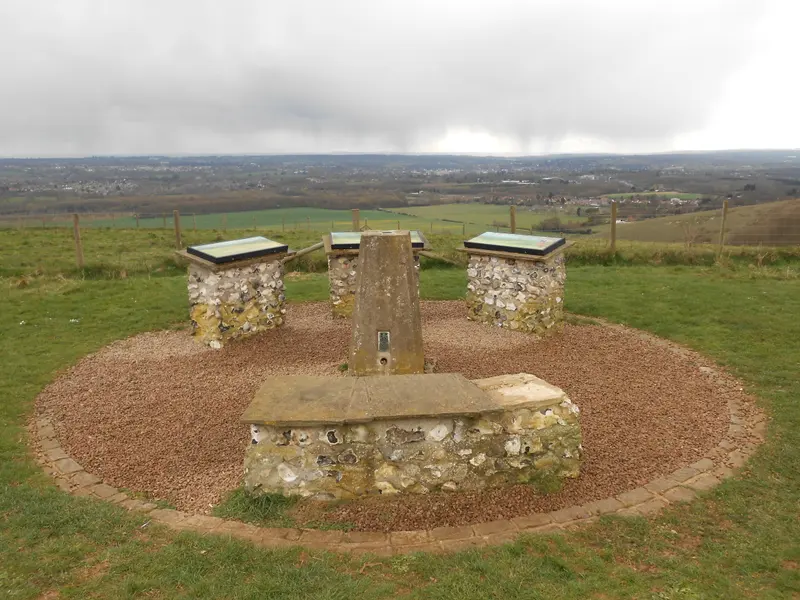
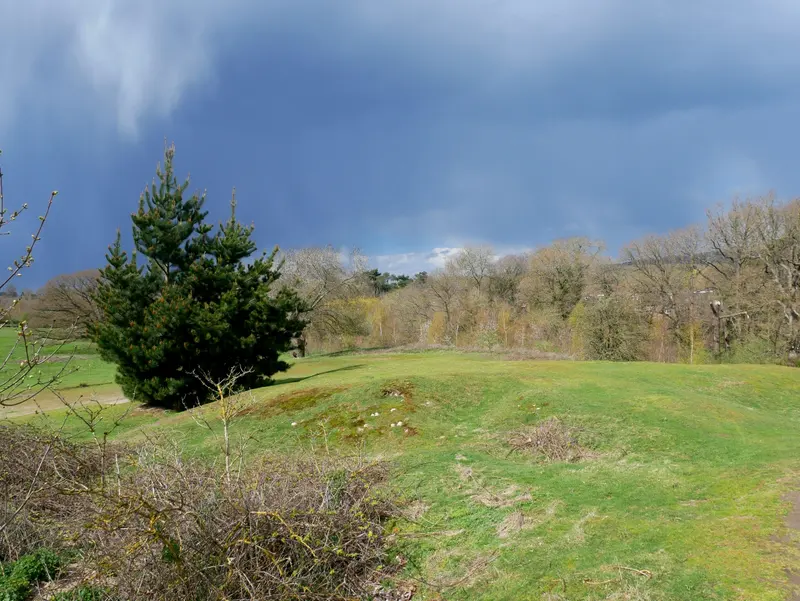
This guide offers a short photographic project, with the practical planning kept separate from the pictures you hope to make. It does not predict weather or describe current conditions. The reference images illustrate local landscape settings; they are not presented as winter photographs or evidence of a recent visit.
Make the outing shorter than your enthusiasm
Begin with a route and a time window that leave a comfortable return before darkness. Check daylight, forecast and access for the actual date. A familiar summer walk can feel different when there is less light, the ground is wet or stopping for photographs means spending longer outdoors than expected.
Choose one main location and a simple fallback. If visibility is poor, a closer subject may work where the wider view does not, provided the conditions still suit the outing. If wind or ground conditions make photography uncomfortable, shorten the visit. Returning another day is part of a sensible project, not a failure to complete it.
Our White Horse Wood guide links to official park and trail information. Use those resources to prepare the visit, then assess the conditions you encounter. A photograph of a clear path on this website cannot establish how that path will be underfoot when you arrive.
Look for an outline with room around it
A tree or group of branches can make a strong winter subject when its outline is easy to read. Look at the spaces between branches as well as the branches themselves. If the background has similar dark shapes, the subject may merge into it even when it looked distinct to your eye.
Try a small change of position within the permitted area to place the outline against a simpler patch of sky or land. You do not need an isolated tree on a perfect horizon. A modest part of the scene can become clear when the background gives it enough separation.
Take one wider and one tighter version. In the wider frame, the surrounding space may carry the mood; in the tighter frame, the branching pattern may become the subject. Decide which relationship interests you before making lots of almost identical photographs.
Give the sky a job
Winter skies can be full of structure or almost featureless. Include the amount that contributes to the picture. A sky with useful cloud shapes may deserve a large part of the frame, while a flat bright area may work better as a narrow strip that separates the land from the edge.
Watch the brightness difference between sky and ground. If the camera records the sky clearly but loses the land in deep shadow, ask whether the silhouette is intentional. If not, change the composition, exposure or timing rather than assuming editing will recover every missing detail.
For a phone photograph, review the result after tapping or adjusting exposure. Automatic processing can make a scene look different from the preview. Keep the version in which the important shapes remain readable, even if it is less immediately dramatic on the small screen.
Use restrained colour deliberately
A quieter colour palette can connect a set of winter photographs. Look for small differences between browns, muted greens and pale sky instead of trying to create the intensity of another season. Colour can remain important even when no single part of the scene is especially bright.
Check white balance before deciding that a photograph needs more saturation. An overall blue or warm cast may be affecting the whole image. Adjust gently and compare with your memory and the original file. The aim is a coherent interpretation, not a claim that one automatic setting always gives the correct winter colour.
You may also find a photograph that works in monochrome, but make that a considered choice. If two areas only separate through colour, they may merge when converted. Our black-and-white landscape guide explains how to judge the tonal structure before choosing a print.
Treat frost or snow as a possibility, not a plan
If frost or snow is present, it can simplify some parts of the landscape and complicate access. Check whether the outing is still appropriate before thinking about the picture. There is no value in a photographic plan that depends on taking an unsuitable route or ignoring conditions on the ground.
Bright snow can cause an automatic exposure to look darker than expected. Canon's snow-photography guide explains the metering issue. Use the camera's preview and exposure tools to judge the actual scene, rather than applying a fixed correction to every snowy photograph.
For composition, look for one line or shape within the lighter area. An edge, shadow or branch may be enough. Do not assume a snowy scene needs many objects to remain interesting; the newly simplified space may be the reason the photograph works.
Keep equipment decisions simple
Use equipment you can operate comfortably with the clothing the day requires. A camera setting that needs prolonged attention may be less useful than a straightforward mode you understand well. Check the manufacturer's guidance for the operating conditions and care of your own device.
Carry enough battery capacity for the outing and keep your navigation plan independent of taking endless photographs. If one phone does everything, its remaining charge matters to more than the camera. Limit unnecessary reviewing and preserve capacity for the journey back.
When you return indoors, follow appropriate care guidance for your equipment, particularly after damp or cold conditions. This is not a reason to buy extra gear automatically. Familiarity with what you already own and a modest plan are often the most useful preparations.
Build a sequence around three different shapes
Choose a horizon, an upright form and a closer pattern. Those three subjects give the project variety without depending on changing locations. You might find the sequence in a single manageable area and finish with a more coherent record than a much longer walk would produce.
At home, compare the photographs at a similar size. Remove near-duplicates and check whether each picture adds something. A wide view may establish the landscape while a detail carries its texture. The set should not require every image to explain everything about winter.
For a wall, consider where the quieter tones will be seen. A subtle photograph may reward nearby viewing in good room light, while a stronger outline can read across a larger space. The Thurnham collection provides local reference views, and our framing guide helps translate a chosen composition into an outer size and illustrative finish.
A place for your wall.
Explore the collection, then choose a size and finish at your own pace.